
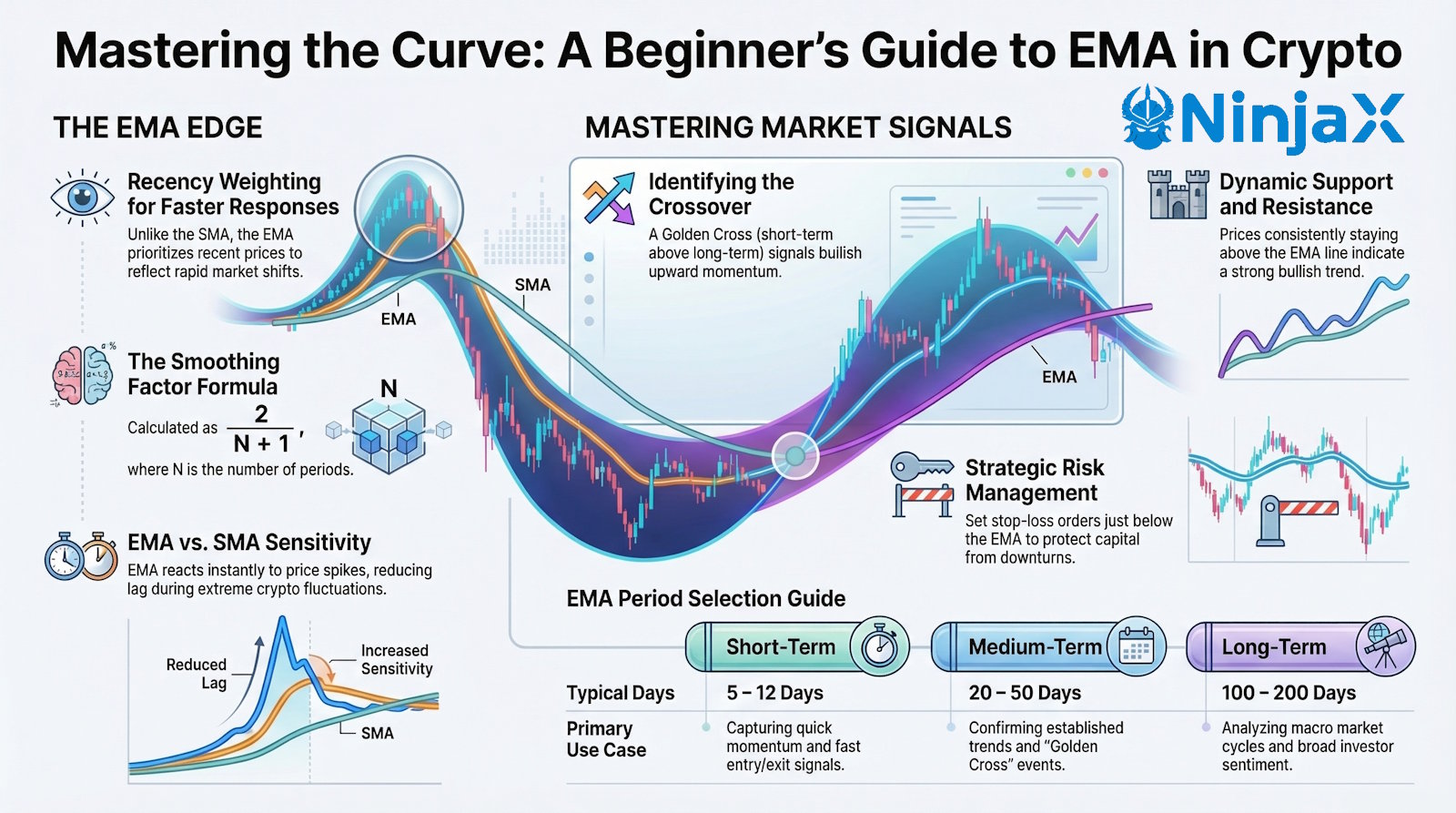
Understanding the Exponential Moving Average (EMA) in Trading
What Is the Role of EMA in Cryptocurrency Trading?
What is an EMA in Crypto Trading? The Exponential Moving Average (EMA) is a crucial technical indicator. Its main purpose is to smooth out price data over a defined period, enabling traders to analyze trends more effectively and make well-informed predictions regarding future market movements.
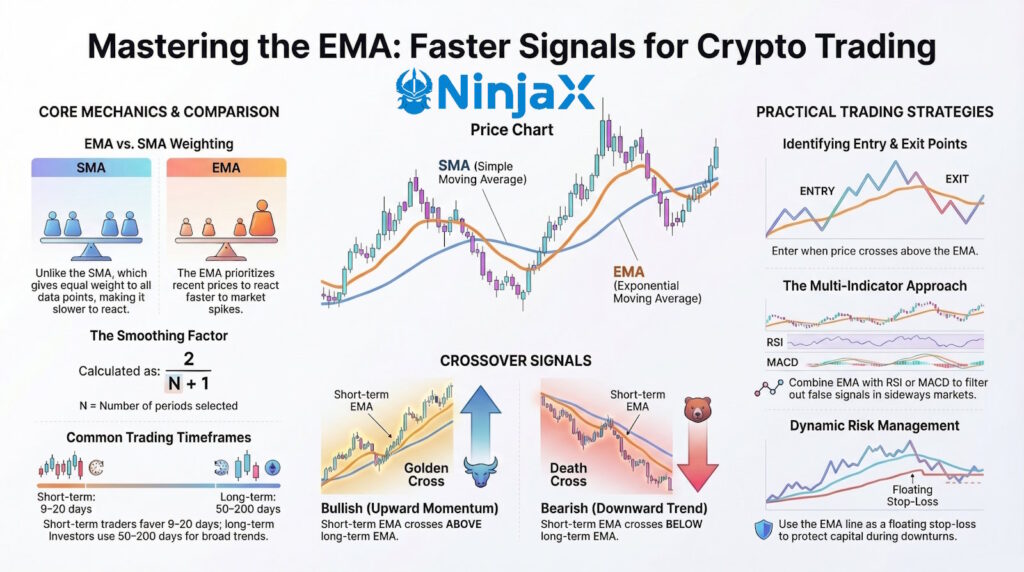

Unlike the Simple Moving Average (SMA), which gives equal weight to all prices within a specific timeframe, the EMA places greater weight on more recent prices. This feature is vital in the crypto market, where price fluctuations can be rapid and extreme. For example, when a trader examines the Bitcoin price chart using a 20-day EMA, the calculations place greater weight on recent price action than on earlier data. Consequently, sudden price spikes or drops in Bitcoin will be reflected more promptly in the EMA than in the SMA, allowing traders to respond swiftly to market shifts.
A practical example of EMA use is evident in real-time trading platforms, where traders frequently overlay EMAs on their charts. For instance, in a bullish trend, a trader may notice that the 10-day EMA crosses above the 50-day EMA, signaling a classic “golden cross” and indicating potential upward momentum. Conversely, when the shorter EMA crosses below the longer EMA, termed a “death cross,” it may suggest an impending decline. By incorporating EMA into their trading methodologies, traders can achieve deeper insights into market dynamics, leading to better decision-making and enhanced trading results.
Essential Elements That Define EMA
The mathematical basis of the Exponential Moving Average lies in its distinct calculation method, which sets it apart from the Simple Moving Average. The EMA formula includes a smoothing factor derived from the trader-selected time period. This factor dictates the weight assigned to the most recent price data. The shorter the timeframe, the more responsive the EMA becomes to price changes, which is especially crucial in crypto markets, where volatility is constant, and traders require tools that accurately reflect rapid price shifts.
To calculate the EMA, traders generally follow these steps: first, they select the desired time frame, such as 10 days, 20 days, or even longer. Next, they compute the initial EMA as a simple average of prices over that period. Afterward, they apply the EMA formula, which is:
[ EMA = Current Price × Smoothing Factor + Previous EMA × (1 – Smoothing Factor) ]
The smoothing factor is computed as:
[ Smoothing Factor = 2 / (N + 1) ]
Where N represents the number of periods, for instance, in a 20-day EMA, the smoothing factor would be approximately 0.095. This mathematical nuance enables the EMA to react more sensitively to recent price changes, making it an invaluable asset for traders seeking to capitalize on short-term opportunities in the highly dynamic crypto landscape.
How Traders Utilize EMA in Cryptocurrency Markets
The flexibility of the Exponential Moving Average makes it a preferred tool among traders for pinpointing entry and exit points within their trading strategies. By focusing on recent price action, the EMA enables traders to make decisions that reflect current market conditions rather than being influenced by outdated information. When traders look to enter a position, they might seek instances where the price has just crossed above the EMA line, signaling potential bullish momentum. Conversely, a price drop below the EMA could indicate an ideal moment to exit a position or short the asset.
Incorporating EMA into daily trading routines can significantly improve decision-making. Traders can adopt a straightforward methodology by following these actionable steps:
- Determine the timeframe that aligns with your trading strategy—whether short-term, medium-term, or long-term.
- Calculate the EMA for the selected period using the most recent price data.
- Monitor the EMA crossover points for potential buy or sell signals.
- Combine EMA signals with other indicators, such as RSI or MACD, to develop a more comprehensive trading strategy.
By cultivating a disciplined approach to using EMA, traders can streamline their analysis, enabling quicker responses to price movements. This systematic application of EMA not only boosts trading efficiency but also fosters confidence that can help mitigate emotional decision-making under volatile market conditions.
Understanding EMA’s Functionality in Crypto Trading
Practical Steps for Implementing EMA in Trades
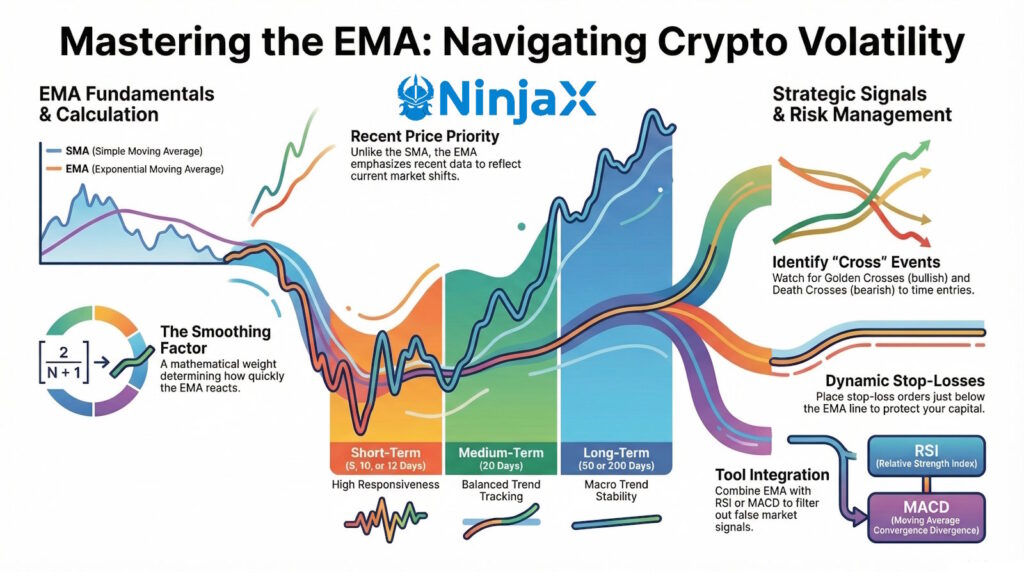
Utilizing the Exponential Moving Average in trading involves a series of straightforward steps that can be performed on most trading platforms. Initially, traders need to choose the cryptocurrency they wish to analyze, such as Ethereum or Litecoin. Next, they should determine the specific EMA period that aligns with their trading strategy, recognizing that shorter periods yield quicker signals. In comparison, longer periods provide a more stable overview of trends.
Once the timeframe is established, traders begin by calculating the EMA using recent price data. Most trading platforms provide built-in tools that automate this process, simplifying the EMA plotting on a chart. However, for those who prefer a manual approach, here’s a concise bullet list of essential steps for effective EMA implementation:
- Select a cryptocurrency for analysis.
- Choose the EMA time period based on your trading style.
- Access the charting tools on your trading platform.
- Plot the EMA on the price chart using recent price data.
- Monitor the EMA line for crossover signals.
- Adjust your trading strategy based on EMA indicators.
As the EMA is plotted, traders should remain vigilant for signals that indicate potential market movements. For example, if the price consistently stays above the EMA, it may suggest a bullish trend, encouraging traders to consider entering long positions. Conversely, if the price dips below the EMA, it could signal a bearish trend, necessitating caution or a reassessment of current positions. By following these steps, traders can effectively leverage the EMA to enhance their analysis and decision-making.
What Factors Influence EMA Accuracy?
The precision of the Exponential Moving Average is influenced by several factors, primarily the chosen time periods and the prevailing market conditions. Traders must acknowledge that different time frames suit different trading strategies. For example, short-term traders might employ a 5-day or 10-day EMA to seize quick price movements, while long-term investors may prefer a 50-day or 200-day EMA for a broader market perspective.
Market conditions also significantly impact EMA reliability. In trending markets, the EMA can provide clear signals; however, in sideways or volatile markets, false signals may occur more frequently. This underscores the importance of traders combining EMA analysis with other indicators to validate signals and gain a comprehensive understanding of market dynamics.
Recognizing the effects of volatility is another critical consideration. In the crypto space, where price fluctuations can be dramatic, a trader relying solely on EMA signals without additional context risks making poor decisions. For example, during extreme market conditions, traders may observe a lag in the EMA’s response to price movements. Therefore, it is prudent to maintain flexibility in strategy and incorporate additional data points, such as volume and other technical indicators, to heighten the overall accuracy of EMA signals.
Enhancing EMA Effectiveness Through Tool Integration
Integrating the Exponential Moving Average with other analytical tools can greatly refine a trader’s approach in the cryptocurrency market. By employing EMA alongside volume indicators, traders can gain a more balanced perspective in assessing market opportunities. Volume is a critical component of any trading strategy; it signifies the number of assets traded over a specific time frame and often correlates with the strength of price movement.
For instance, if a trader observes the price crossing above the EMA with increasing volume, this could suggest a strong bullish signal, indicating that the upward movement is supported by significant market interest. Conversely, if the price crosses below the EMA with low volume, it may be a false signal, as the lack of participation implies weaker conviction in the price movement.
To effectively incorporate EMA with other tools, traders should consider the following strategies:
- Combine EMA with RSI (Relative Strength Index) to identify overbought or oversold conditions.
- Use EMA alongside MACD (Moving Average Convergence Divergence) to confirm trend changes.
- Incorporate volume analysis to validate EMA signals and assess market strength.
- Experiment with different combinations of indicators to find what aligns best with your trading style.
By adopting a multifaceted approach, traders can enhance their decision-making, a practice that is particularly crucial in the unpredictable realm of cryptocurrency trading. This strategy not only provides a more robust analytical framework but also reduces the risk of relying solely on a single indicator.
The Benefits of Using EMA in Trading
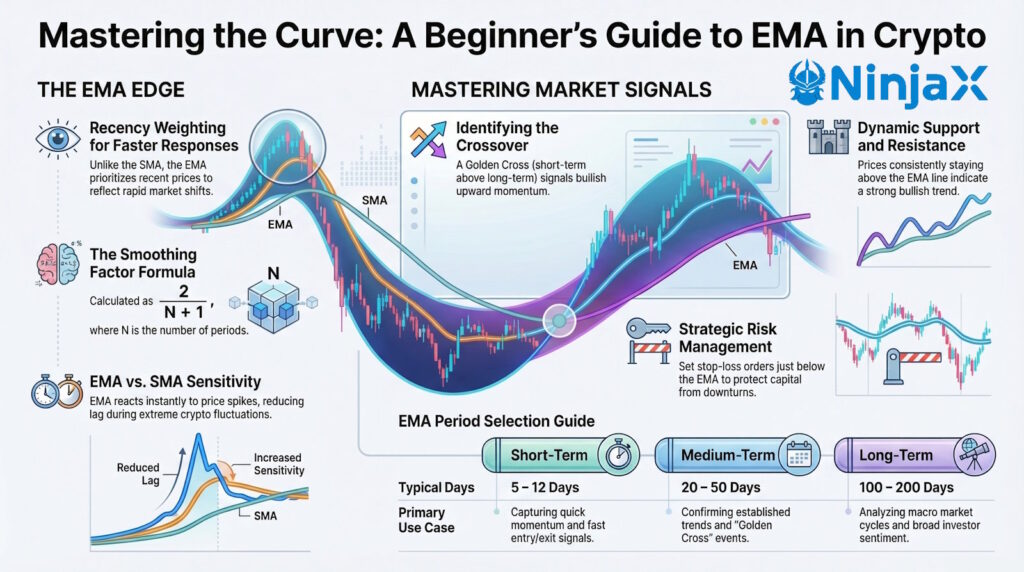
What Makes EMA a Favorite Among Traders?
The Exponential Moving Average’s widespread appeal among traders stems from its ability to deliver faster, more precise signals than other moving averages. This responsiveness is especially beneficial in the fast-paced world of cryptocurrency, where price alterations can occur almost instantaneously. The EMA’s ability to react swiftly allows traders to capitalize on emerging trends, significantly reducing the likelihood of missing profitable opportunities.
Furthermore, the EMA helps reduce emotional decision-making, a common challenge traders encounter, particularly in volatile markets. By relying on data-driven indicators like the EMA, traders can execute systematic strategies based on objective criteria rather than succumbing to fear or greed. This disciplined approach is vital for achieving success in crypto trading, where emotional responses can lead to hasty and potentially costly decisions.
For instance, consider a crypto trader using a 12-day EMA alongside a 26-day EMA in their trading strategy. When the 12-day EMA crosses above the 26-day EMA, it generates a buy signal, prompting the trader to enter a long position. Conversely, when the 12-day EMA crosses below the 26-day EMA, it triggers a sell signal. This clear framework empowers traders to make timely decisions without second-guessing their strategies, ultimately improving their overall trading results.
How EMA Benefits Short-Term Trading Strategies
For traders focused on short-term strategies, the Exponential Moving Average offers several unique advantages that can enhance trading efficiency. One of the primary benefits is its ability to detect momentum shifts and reversals quickly. In the highly volatile crypto market, identifying these changes in sentiment can enable timely entries and exits, thereby significantly impacting profitability.
For example, during a sharp upward movement in a cryptocurrency’s price, a trader observing the EMA may detect a rapid rise above it, signaling strong bullish momentum. This could prompt the trader to enter a position, capitalizing on the upward trend. Conversely, if the price begins to retreat below the EMA, it may indicate a potential reversal, encouraging the trader to close their position before incurring further losses.
To maximize gains while minimizing risks in short-term trading, traders can implement the following practical tips:
- Stick to shorter EMA periods (e.g., 5, 10, or 12 days) for quicker signals.
- Combine EMA with volatility indicators, such as Bollinger Bands, to assess market conditions.
- Set stop-loss orders just below the EMA to safeguard against sudden downturns.
- Regularly review and adjust EMA settings as market conditions evolve.
By applying these strategies, traders can effectively leverage the benefits of EMA to remain agile in the rapidly changing crypto markets. This proactive approach ensures they can adapt to swift price shifts while maintaining a solid risk management framework.
Improving Overall Trading Efficiency with EMA
The integration of the Exponential Moving Average into a trader’s toolkit not only streamlines their analysis processes but also enhances overall trading efficiency. EMA simplifies the complexity of price data, allowing traders to concentrate on key market trends and signals rather than becoming overwhelmed by raw numbers. This clarity is crucial in the fast-paced environment of cryptocurrency trading, where quick, informed decisions can yield substantial rewards.
By making EMA a central component of their analysis, traders can more effectively identify significant price movements and trends. For instance, if a crypto trader consistently observes price action above the EMA line, it may indicate a strong bullish trend, prompting them to consider long positions. Conversely, if prices frequently dip below the EMA, this could suggest a bearish scenario, leading traders to either exit their positions or adopt a more defensive strategy.
Moreover, incorporating EMA into a trading routine helps develop a disciplined approach. Traders who rely on this indicator can establish a systematic methodology, adhering to predetermined entry and exit points based on EMA signals. This discipline helps mitigate emotional responses that often lead to poor trading decisions, ultimately fostering improved performance and consistency.
To further enhance trading efficiency, traders can take specific actions, including:
- Regularly reviewing EMA settings in conjunction with changing market trends.
- Utilizing multiple EMAs with different periods to create a comprehensive analytical framework.
- Integrating EMA with other technical indicators to confirm signals and trends.
- Implementing a trading journal to track EMA-related trades and outcomes for continuous improvement.
By embedding EMA practices into their trading strategies, traders can cultivate a more efficient approach, enabling them to navigate the complexities of the crypto market with confidence.
Using EMA for Identifying Market Trends
The Exponential Moving Average is a powerful instrument for identifying emerging trends in cryptocurrency markets, making it an invaluable asset for traders aiming to optimize their entry and exit strategies. The EMA’s responsiveness to recent price changes allows traders to detect trends earlier than traditional moving averages, thereby enhancing their decision-making accuracy.
When the price consistently remains above the EMA, it suggests a strong bullish trend. This is an ideal time for traders to contemplate initiating long positions. Conversely, when the price consistently falls below the EMA, it indicates bearish momentum, prompting traders to reassess their positions or consider shorting the asset. The ability to identify these trends with precision can significantly impact a trader’s profitability, particularly in the fast-paced crypto market, where trends can shift rapidly.
For instance, if Ethereum’s price rises above the 20-day EMA and maintains that position with increasing volume, it signals a robust bullish trend. Traders can leverage this information to enter positions at optimal times, maximizing their potential returns. Conversely, if the price begins to pull back and crosses below the EMA, it may indicate a need to exit the position or tighten stop-loss orders to protect profits.
To effectively utilize EMA for trend identification, traders may implement the following strategies:
- Monitor EMA crossovers, such as when a short-term EMA crosses above a longer-term EMA.
- Adjust the EMA periods according to market volatility to capture trends accurately.
- Use EMA in conjunction with support and resistance levels to validate trend strength.
- Analyze historical EMA performance during similar market conditions to inform future strategies.
By harnessing the power of EMA to identify trends, traders can significantly enhance their decision-making capabilities. This proactive approach not only boosts profitability but also fosters a deeper understanding of market dynamics, a vital skill in the ever-evolving cryptocurrency trading landscape.
Expert Insights on Mastering EMA in Crypto Trading
Advanced Techniques for Achieving Proficiency with EMA
To achieve a high level of proficiency with the Exponential Moving Average, traders can explore advanced techniques that enable more nuanced analysis of market dynamics. One such method involves utilizing multiple EMAs with varying periods to create a more layered understanding of price trends. For example, a trader may employ both the 20-day EMA and the 50-day EMA simultaneously. Observing their interactions can yield critical insights into trend reversals and momentum shifts.
A classic strategy involves monitoring crossover points between a short-term EMA and a long-term EMA, known as the “golden cross” and “death cross” signals. When the shorter EMA crosses above the longer EMA, it can suggest a bullish trend, whereas a cross below may indicate bearish momentum. Traders can enhance this approach by incorporating additional filters, such as RSI or MACD, to confirm the strength of these signals and reduce the risk of false entries.
Real-world examples of advanced EMA applications include setting trailing stop-loss orders based on EMA levels. For instance, a trader might position their stop-loss a percentage below the EMA to lock in profits while allowing for potential upward movement. Furthermore, integrating EMA with volatility metrics, such as the Average True Range (ATR), can further refine entry and exit strategies, enabling traders to adapt their methods to changing market conditions.
To master these advanced techniques, traders should:
- Experiment with various EMA combinations to gauge their effectiveness across different market scenarios.
- Backtest strategies that utilize multiple EMAs to enhance their accuracy.
- Incorporate additional technical indicators to provide a comprehensive analysis.
- Stay updated on market trends to adapt EMA usage accordingly.
By embracing these advanced techniques, traders can elevate their EMA proficiency, ultimately improving their overall trading success in the dynamic cryptocurrency landscape.
Evaluating EMA Performance Across Market Cycles
Assessing the performance of Exponential Moving Averages throughout various market cycles is crucial for traders seeking to maintain an effective strategy over time. Distinct phases, including bullish trends, bearish downturns, and sideways movements, characterize cryptocurrency markets. Understanding how EMA performs across these cycles can enhance a trader’s adaptability and strategic planning.
In bullish markets, the EMA tends to deliver timely signals for entry and exit points, effectively reflecting the upward price momentum. Traders can capitalize on the EMA’s quick responsiveness, allowing them to secure profits as prices rise. Conversely, in bearish markets, EMAs can help identify potential exit points before significant losses occur, serving as a safeguard against adverse price movements.
During sideways or consolidating markets, however, the EMA may generate false signals as prices oscillate around the moving average. In such scenarios, traders should exercise caution and contemplate using EMA alongside other indicators to filter out noise. For instance, integrating the EMA with volume analysis can provide additional context, helping traders discern whether recent price movements are significant or merely temporary fluctuations.
To effectively evaluate EMA across different market cycles, traders can adopt the following strategies:
- Monitor the EMA’s responsiveness during various market phases and adjust settings as necessary.
- Combine EMA signals with broader market analysis for more accurate trend assessments.
- Utilize historical data to identify patterns in EMA performance across cycles.
- Incorporate risk management techniques to mitigate potential losses during volatile periods.
By developing a nuanced understanding of how EMA interacts with different market cycles, traders can remain agile and informed, ultimately enhancing their decision-making and trading outcomes.
Long-Term Value of EMA Knowledge for Traders
A solid understanding of the Exponential Moving Average can yield substantial long-term benefits for traders, forming a robust foundation for successful cryptocurrency trading. As the crypto landscape evolves, traders who are well-versed in EMA principles can adapt their strategies more effectively to changing market conditions. This adaptability is vital in a market known for its rapid fluctuations and unpredictability.
By mastering EMA, traders gain access to a powerful analytical tool that enhances their ability to identify trends, manage risks, and make data-driven decisions. This proficiency not only improves short-term trading success but also cultivates a deeper understanding of market dynamics that can be invaluable for long-term investments. For instance, investors aiming to build a diversified crypto portfolio can utilize EMA to time their entries and exits strategically, optimizing their capital allocation over prolonged periods.
Continuous learning and application of EMA principles enable traders to refine their skills and stay up to date with best practices. Engaging with online communities, participating in trading forums, and analyzing case studies can further deepen one’s expertise, allowing traders to exchange insights and strategies that effectively leverage EMA.
To maximize the long-term value of EMA knowledge, traders should:
- Commit to ongoing education about EMA techniques and market developments.
- Engage with trading communities to share knowledge and experiences.
- Experiment with various EMA strategies to enhance adaptability.
- Document and review trading outcomes to identify areas for improvement.
By investing in their understanding of the Exponential Moving Average, traders can cultivate a resilient trading approach that benefits them across changing market conditions and enhances their overall trading success.
Comparing EMA with Alternative Indicators
When evaluating the Exponential Moving Average, it is crucial to compare it with other technical indicators to understand its strengths and weaknesses in cryptocurrency trading. The Simple Moving Average (SMA) is one of the most commonly contrasted indicators. While both EMA and SMA are employed to smooth price data, the main difference lies in their sensitivity to price changes. The EMA reacts more quickly to recent price movements, making it particularly advantageous in volatile markets.
For instance, in a rapidly changing market like cryptocurrencies, the EMA’s responsiveness can provide traders with timely signals for entries and exits. In contrast, the SMA may lag, leading to missed opportunities. Traders who prioritize quick decision-making often favor the EMA for this reason.
Another indicator frequently compared to EMA is the Moving Average Convergence Divergence (MACD). While MACD is derived from EMAs, it serves a different purpose: it focuses on the relationship between two EMAs to identify momentum. Traders can enhance their strategies by employing EMA alongside MACD to confirm trends and potential reversals, providing a more comprehensive analytical perspective.
Additionally, comparing EMA with other indicators, such as Bollinger Bands, reveals how they can complement each other. While EMA provides directionality, Bollinger Bands can help traders assess volatility and potential price targets, enabling a more nuanced approach to trading decisions.
To effectively leverage EMA alongside other indicators, traders should consider:
- Understanding the unique strengths of EMA in responsive trading strategies.
- Integrating EMA with MACD for more robust momentum analysis.
- Using EMA alongside Bollinger Bands to evaluate volatility and price targets.
- Experimenting with various combinations of indicators to discover optimal setups.
By conducting thorough comparisons between EMA and other tools, traders can enhance their decision-making processes and develop a more well-rounded trading strategy that effectively navigates the complexities of the cryptocurrency market.
Employing EMA in Risk Management
Implementing effective risk management strategies is paramount in cryptocurrency trading, given the market’s inherent volatility. The Exponential Moving Average can play a pivotal role in this regard, offering traders tools to identify entry and exit points, which are essential for managing risk effectively. By understanding how to apply EMA in risk management, traders can protect their capital while seizing market opportunities.
One primary strategy is to use EMA as a dynamic stop-loss indicator. By placing a stop-loss order just below the EMA, traders can protect against sudden adverse price movements while allowing potential upward trends to continue. This approach ensures that traders can participate in market rallies without exposing themselves to excessive losses.
Additionally, traders can utilize EMA to determine position sizes based on market volatility. For example, during periods of heightened volatility, traders may opt to reduce their position sizes when entering trades guided by EMA signals. This method allows for a more conservative approach, helping to minimize potential drawdowns during unpredictable market conditions.
Another effective risk management technique is to combine EMA with other indicators to confirm entry and exit signals. For example, using EMA alongside the Relative Strength Index (RSI) can help identify overbought or oversold conditions, providing further validation for trading decisions. This multifaceted approach empowers traders to make more informed choices while managing risk effectively.
To enhance risk management using EMA, traders should adopt the following strategies:
- Set stop-loss orders based on EMA levels to guard against adverse price movements.
- Adjust position sizes based on market volatility, using the EMA as a reference.
- Combine EMA with other indicators to confirm trade signals and minimize risks.
- Regularly review and assess risk management strategies in light of ongoing market conditions.
By integrating EMA into a comprehensive risk management strategy, traders can navigate the volatile cryptocurrency landscape with greater confidence, ultimately safeguarding their investments while pursuing profitable opportunities.
What Limitations Should Traders Be Aware of Regarding EMA?
Identifying Potential Pitfalls in EMA Usage
Despite its advantages, the Exponential Moving Average presents certain limitations that traders must recognize to avoid pitfalls in their strategies. One common error is overreliance on EMA signals, particularly in sideways or choppy markets where price fluctuations can produce misleading signals. In such situations, the EMA may generate false signals, leading traders to enter or exit positions based on unreliable data.
For example, during consolidation phases, the price may oscillate around the EMA line, resulting in frequent crossovers that do not signify genuine trend changes. Traders who overlook this phenomenon risk making impulsive decisions that could lead to significant losses. It is vital to maintain a balanced approach and combine EMA analysis with other indicators to validate signals and avoid falling into the trap of false breakouts.
Another potential pitfall is the selection of EMA periods. While shorter EMAs provide quicker signals, they may also introduce increased noise in the data, resulting in whipsaw trades where traders are repeatedly triggered into trades that do not yield favorable outcomes. Conversely, longer EMAs may lag in responding to price changes, leading to missed opportunities. Finding the right balance for the EMA period is essential for effective trading.
To mitigate these challenges, traders should:
- Be cautious of relying solely on EMA signals, particularly in sideways markets.
- Test various EMA periods to identify the optimal settings for their trading style.
- Combine EMA with other indicators to validate signals and enhance accuracy.
- Stay vigilant about market conditions that may impact EMA reliability.
By understanding and addressing these potential pitfalls, traders can harness the power of the EMA more effectively while minimizing the risks associated with its use.
Strategies for Mitigating Risks Associated with EMA
Mitigating risks linked to the Exponential Moving Average requires a comprehensive understanding of market conditions and a strategic trading approach. One of the primary challenges traders face with EMA is false signals, particularly in volatile markets where price movements can be erratic. To counteract this, traders should develop robust backup plans that incorporate multiple indicators and risk management techniques.
One effective strategy is to adopt a confirmation approach, where traders wait for additional signals before acting on EMA crossovers. For example, instead of entering a trade immediately upon an EMA crossover, traders might look for confirmation from other indicators, such as the Relative Strength Index (RSI) or Bollinger Bands. Waiting for convergence among multiple signals increases the chances of making informed decisions.
Furthermore, implementing strict risk management protocols is essential for capital protection. Traders can establish predefined stop-loss levels based on EMA values, ensuring that they exit trades when prices move against them. This method not only limits losses but also fosters discipline, allowing traders to adhere to their strategies without succumbing to emotional impulses.
Moreover, staying informed about market news and events provides valuable context for EMA analysis. Major announcements or developments can significantly influence cryptocurrency prices, leading to unexpected volatility. By staying informed, traders can adjust their EMA settings or trading strategies accordingly, maintaining a proactive stance amid changing market dynamics.
To effectively mitigate risks, traders should:
- Employ a confirmation approach by waiting for additional signals before acting on EMA crossovers.
- Implement strict risk management protocols, including stop-loss orders based on EMA levels.
- Stay informed about market news and trends to provide context for EMA signals.
- Regularly review and adjust trading strategies in response to ongoing market conditions.
By adopting these strategies, traders can navigate the challenges associated with EMA usage, enhancing their resilience and decision-making capabilities in the unpredictable world of cryptocurrency trading.
Comparing EMA with Alternative Indicators
While the Exponential Moving Average is a potent tool for traders, it’s essential to recognize scenarios where other indicators might outperform EMA in cryptocurrency trading. One notable alternative is the Simple Moving Average (SMA), which, despite its lagging nature, can provide a clearer view of long-term trends without the noise that shorter EMAs may introduce. For long-term investors, using an SMA can help establish a broader market perspective without getting caught up in short-term price fluctuations.
Another alternative indicator is the Average True Range (ATR), which measures market volatility rather than price direction. Traders focusing on volatility may find ATR more advantageous, as it provides insights into market conditions that can complement EMA signals. For instance, during periods of heightened volatility, traders might adjust their EMA settings or trading strategies to accommodate potential price swings.
The Moving Average Convergence Divergence (MACD) also serves as a powerful alternative to EMA. While MACD is derived from EMAs, it offers a different perspective by highlighting momentum and trend strength. Traders can use MACD alongside EMA to confirm trends and identify potential reversals, thus offering a well-rounded analytical framework.
Lastly, the Bollinger Bands indicator can also be used alongside, or even replace, the EMA in certain trading strategies. Bollinger Bands provide insights into price volatility and potential reversal points, enabling traders to gauge market conditions effectively. In some scenarios, traders may find that relying on Bollinger Bands alone can yield better results than using EMA in sideways markets.
To optimize trading strategies, traders should:
- Assess the strengths and weaknesses of EMA in comparison to other indicators like SMA, ATR, and MACD.
- Experiment with different combinations of indicators to identify optimal setups for specific trading conditions.
- Maintain flexibility in their approaches, adapting strategies based on the current market environment.
- Engage in backtesting to determine the effectiveness of various indicators in their trading style.
By acknowledging the limitations of EMA and exploring alternative indicators, traders can enhance their decision-making capabilities and develop more comprehensive trading strategies tailored to the ever-evolving cryptocurrency landscape.
Practical Applications of EMA in Trading
Daily Scenarios for EMA Use in Cryptocurrency
For traders immersed in the cryptocurrency markets, the Exponential Moving Average serves as a practical tool for daily market monitoring. By integrating EMA into their everyday routines, traders can transform price data into actionable insights, allowing for swift, informed decision-making. Whether engaging in day trading or managing long-term positions, EMA offers a straightforward approach to analyzing market trends.
Traders typically begin their day by reviewing the latest price charts and applying the EMA to identify potential trading opportunities. For instance, if a cryptocurrency’s price crosses above the EMA after a period of consolidation, it may signal a buying opportunity. Conversely, if the price dips below the EMA, traders might consider exiting their positions to protect profits. This ability to promptly assess market conditions empowers traders to react quickly to changing dynamics, maximizing their chances of success.
Additionally, traders can monitor EMA signals as part of their routine risk management strategies. For example, if a trader has set a stop-loss order just below the EMA, they can quickly determine whether their position remains valid by observing price action relative to the EMA. This proactive approach allows traders to maintain a disciplined trading strategy while protecting their capital.
To effectively apply EMA in everyday trading, traders can consider the following strategies:
- Review EMA signals daily to identify potential trading opportunities.
- Set alerts for EMA crossovers to stay informed about market movements.
- Incorporate EMA into routine risk management practices, such as stop-loss placements.
- Analyze historical EMA performance to refine trading strategies over time.
By embedding EMA into their daily trading routines, traders can harness its power to streamline analysis and decision-making, ultimately enhancing their overall trading effectiveness.
Utilizing EMA in Portfolio Management
In portfolio management, the Exponential Moving Average plays a significant role in helping traders optimize their asset allocations and risk exposure. By examining individual cryptocurrencies through the lens of EMA, traders can make informed decisions about when to enter or exit positions, thereby contributing to more effective portfolio management.
For instance, if a trader observes that a cryptocurrency’s price has consistently remained above its EMA, it may indicate a bullish trend, prompting them to consider increasing their position in that asset. Conversely, if the price falls below the EMA, it may signal a bearish trend, encouraging the trader to reduce their exposure or even take profits. By leveraging EMA in this manner, traders can actively manage their portfolios to capitalize on price movements while minimizing risks.
Moreover, incorporating EMA into broader portfolio management strategies allows traders to balance their holdings across various cryptocurrencies effectively. For example, if a trader is heavily invested in one asset but notices it trending below its EMA, they may decide to diversify their portfolio by reallocating funds to other cryptocurrencies exhibiting stronger trends. This approach can help mitigate risks associated with sector concentration.
To enhance portfolio management using EMA, traders can implement the following strategies:
- Use EMA to monitor individual assets in a portfolio to identify timely entry and exit points.
- Adjust portfolio allocations based on EMA signals to optimize performance.
- Assess the overall portfolio’s performance against EMA trends to identify areas for improvement.
- Diversify holdings based on EMA analysis to reduce risks associated with individual assets.
By applying EMA insights to portfolio management, traders can foster a more robust approach to capital allocation, ultimately enhancing their potential for long-term success in the cryptocurrency markets.
Personalizing EMA for Individual Trading Styles
Customizing the Exponential Moving Average to align with individual trading styles is essential for maximizing its effectiveness. Every trader has unique preferences, risk tolerances, and strategies, so adjusting EMA parameters can significantly influence their analysis and decision-making. Understanding how to tailor EMA to personal trading styles enables a more customized approach to market analysis.
One way to customize EMA is to select the time period that best reflects a trader’s approach. For short-term traders, using shorter EMAs (such as 5, 10, or 12 days) can yield quicker signals, enabling faster responses to market movements. Conversely, long-term traders may benefit from longer EMAs (such as 50- or 200-day EMAs) that provide a smoother representation of trends over time.
Additionally, traders can experiment with multiple EMAs of varying lengths to develop a comprehensive analysis framework. For instance, using both a short-term EMA and a long-term EMA together can help identify potential crossover points, providing insights into momentum shifts and trend reversals.
To effectively customize EMA for personal trading styles, individuals can consider the following strategies:
- Test different EMA periods to identify the optimal setting for your trading strategy.
- Consider using multiple EMAs to enhance trend analysis and confirm signals.
- Adjust EMA settings based on market conditions, such as volatility or trend strength.
- Incorporate other indicators alongside EMA to develop a personalized analysis framework.
By tailoring EMA parameters to fit personal trading styles, traders can enhance their analytical capabilities, leading to improved decision-making and greater success in the cryptocurrency market.
Research-Backed Strategies for Implementing EMA in Crypto Trading
Evidence-Based Approaches to EMA Usage
Research demonstrates that the Exponential Moving Average is an effective tool for trend-following strategies in cryptocurrency trading. Numerous studies indicate that traders who use EMA can achieve superior results compared to those who rely solely on random trading decisions. The EMA’s responsiveness to recent price movements enables traders to capture trends more effectively, enhancing the likelihood of profitable trades.
One evidence-based approach involves backtesting EMA strategies against historical price data. By analyzing past performance, traders can identify reliable patterns and refine their strategies based on real-world outcomes. For instance, research has shown that a combination of short- and long-term EMAs can yield favorable results, particularly when traders focus on crossovers as entry and exit signals.
Moreover, studies indicate that applying EMA alongside other technical indicators—such as the Relative Strength Index (RSI)—can enhance overall trading performance. By combining EMA signals with momentum indicators, traders can filter out noise and confirm trends, reducing the likelihood of false signals.
To implement evidence-based EMA strategies effectively, traders should:
- Conduct backtesting on various EMA parameters to identify optimal settings for different cryptocurrencies.
- Combine EMA with momentum indicators, such as RSI, for enhanced signal confirmation.
- Review historical performance to inform future trading decisions and refine strategies.
- Stay informed about market trends and research to adapt EMA strategies accordingly.
By embracing evidence-based approaches, traders can leverage the power of EMA to enhance their trading performance and achieve consistent results in the cryptocurrency landscape.
Building Effective Strategies Around EMA Data
Developing effective trading strategies around the Exponential Moving Average requires a systematic approach that integrates EMA data into decision-making. Traders can leverage EMA insights to create tailored plans that align with their risk profiles and trading goals. By using EMA as a core component of their strategies, traders can better capitalize on market trends.
A common strategy involves using EMA crossovers as signals to enter and exit trades. For instance, traders might establish a rule to enter a long position when a short-term EMA crosses above a long-term EMA, and exit when the opposite occurs. This straightforward approach allows traders to capitalize on momentum shifts while minimizing the influence of emotional decision-making.
Additionally, traders can enhance their strategies by incorporating stop-loss and take-profit levels based on EMA values. For example, setting a stop-loss order slightly below the EMA line can help protect against sudden price declines while allowing for potential upward movement. Similarly, traders can establish take-profit levels based on EMA targets, enabling them to lock in gains as prices approach key resistance points.
To effectively build strategies around EMA data, traders should consider:
- Develop clear entry and exit rules based on EMA crossovers and trends.
- Integrate stop-loss and take-profit levels grounded in EMA values to manage risk effectively.
- Refine strategies through backtesting to identify optimal performance metrics.
- Regularly review and adjust strategies as market conditions evolve.
By constructing well-defined strategies that leverage EMA data, traders can enhance their decision-making and improve their chances of success in the ever-evolving cryptocurrency market.
Measuring Strategy Success with EMA
Evaluating the success of trading strategies that incorporate the Exponential Moving Average is essential for ongoing improvement and adaptation. Traders can employ various metrics to assess the effectiveness of their EMA-based strategies, providing valuable insights that inform future decisions. By systematically measuring performance, traders can refine their approaches and enhance their overall trading success.
One of the primary metrics to consider is the win rate, which reflects the percentage of profitable trades relative to the total number of trades executed. Traders can analyze their win rate for EMA-based strategies to determine whether their approach is yielding positive results. A higher win rate signifies that the strategy effectively captures trends and generates profits.
Another important metric is the risk-to-reward ratio, which assesses the relationship between a trade’s potential profit and potential loss. Traders can evaluate their risk-to-reward ratio when utilizing EMA signals to ensure that they are not risking more capital than they stand to gain. A favorable risk-to-reward ratio, typically above 1:2, indicates that the strategy has the potential for long-term profitability.
Additionally, tracking drawdowns—the peak-to-trough decline in equity—can offer insights into the volatility associated with EMA-based strategies. By monitoring drawdowns, traders can identify periods of potential stress and adjust their risk management techniques accordingly.
To effectively measure strategy success with EMA, traders should focus on:
- Calculating win rates to evaluate the effectiveness of EMA-based strategies.
- Assessing risk-to-reward ratios to ensure profitable trade setups.
- Monitoring drawdowns to identify periods of increased risk and volatility.
- Regularly reviewing performance metrics to refine and adjust trading strategies.
By systematically measuring strategy success using these criteria, traders can enhance their understanding of EMA’s impact on their performance and make informed adjustments to optimize their trading approaches.
How to Effectively Implement EMA?
Setting Up EMA Tools for Optimal Use
Implementing the Exponential Moving Average effectively begins with setting up EMA tools on trading platforms. Most modern trading platforms offer built-in features that allow traders to easily customize their EMA settings. To get started, traders should first select the cryptocurrency they wish to analyze and access the charting tools available on their trading platform.
Once on the chart, traders need to navigate to the indicators section and search for “Exponential Moving Average.” After selecting it, they can specify the EMA period based on their trading strategy—short-, medium-, or long-term. Common periods include 9, 12, 20, and 50 days, with shorter EMAs providing quicker signals and longer EMAs offering more smoothed trends.
After applying the EMA to the chart, traders should also consider adjusting the line color and thickness for better visibility, especially when overlaying multiple indicators. This customization helps traders quickly identify EMA signals amid other data points on the chart.
To ensure a successful setup of EMA tools, traders can follow these steps:
- Select the cryptocurrency to analyze and open the price chart.
- Access the indicators section and choose “Exponential Moving Average.”
- Specify the desired time period for the EMA based on your strategy.
- Customize the EMA line’s appearance to improve clarity.
- Save the settings and begin monitoring EMA signals on the chart.
By effectively setting up EMA tools, traders can streamline their analysis and better identify market trends, ultimately improving their trading performance.
Real-Time Monitoring of EMA Signals
Real-time monitoring of Exponential Moving Average signals is essential for traders looking to capitalize on cryptocurrency market movements. By keeping a close eye on EMA signals, traders can react swiftly to price changes, enabling them to make timely decisions aligned with their trading strategies. The ability to track EMA signals in real time can significantly enhance a trader’s responsiveness and overall effectiveness.
To effectively monitor EMA signals, traders should utilize alert systems available on their trading platforms. Many platforms allow users to set up alerts for specific price levels or EMA crossovers, notifying traders when critical thresholds are reached. This feature enables traders to stay informed without constantly watching the charts, allowing them to focus on other aspects of their trading strategies.
Additionally, traders should consider using multiple time frames when analyzing the EMA. For instance, analyzing a 5-minute chart alongside a 1-hour chart can provide deeper insights into both short- and long-term trends. This multi-timeframe approach allows traders to confirm EMA signals across different periods, enhancing the validity of their trades.
To maximize the effectiveness of real-time EMA monitoring, traders can follow these strategies:
- Set up alerts for key EMA crossovers and price levels to stay informed.
- Monitor multiple time frames to gain a comprehensive view of market trends.
- Utilize charting tools to visualize EMA signals alongside price action.
- Regularly assess market conditions to adapt EMA strategies accordingly.
By implementing these real-time monitoring techniques, traders can enhance their responsiveness to market dynamics, allowing them to make informed decisions based on EMA signals and ultimately improve their trading performance.
Refining EMA Strategies Over Time
Refining the Exponential Moving Average over time is essential for traders seeking to optimize their strategies in response to changing market conditions. As the cryptocurrency landscape is characterized by rapid fluctuations and evolving trends, continuously evaluating and adjusting EMA settings can significantly enhance trading effectiveness.
One method to refine EMA usage is through regular analysis of historical performance. Traders can review past trades that used EMA signals to assess which periods yielded the best results and which may have led to losses. This reflection can guide traders in adjusting their EMA settings based on empirical evidence, allowing them to fine-tune their strategies for better outcomes.
Moreover, traders should remain adaptable to market dynamics. For example, during periods of heightened volatility, they may choose to shorten their EMA periods to capture rapid price movements more effectively. Conversely, during more stable periods, longer EMAs may be more suitable for filtering out noise and identifying broader trends.
Engaging with trading communities and staying informed about market developments can also help refine EMA strategies. By exchanging insights with fellow traders and learning from their experiences, individuals can gain valuable perspectives that inform their own approaches.
To effectively refine EMA usage over time, traders should consider the following strategies:
- Regularly analyze historical performance to identify optimal EMA settings.
- Stay adaptable to changing market conditions by adjusting EMA periods accordingly.
- Engage with trading communities to share insights and learn from others.
- Continuously educate themselves about market trends and developments to inform EMA strategies.
By actively refining their use of EMA, traders can better navigate the complexities of the cryptocurrency market, ultimately improving their decision-making and trading success.
Best Practices for Successful EMA Implementation
Essential EMA Practices for Beginners
For beginners entering the realm of cryptocurrency trading, mastering the Exponential Moving Average can be transformative. To lay a solid foundation, it’s vital to adopt best practices that facilitate effective EMA usage from the outset. These foundational strategies help newcomers develop confidence and establish a disciplined trading approach.
One of the key best practices is to start with a clear understanding of the EMA concept and its significance in trend analysis. Beginners should invest time in learning how EMAs are calculated and how they differ from other moving averages. Practical application through paper trading or small real trades can help reinforce this knowledge.
Additionally, beginners should begin with shorter EMA periods, such as 9 or 12 days. Shorter EMAs can provide quicker signals and help new traders gain experience in recognizing trends without becoming overwhelmed by noise. As they become more comfortable with EMA analysis, they can gradually experiment with longer settings, tailoring their approach to fit their trading style.
Furthermore, beginners should develop a trading plan that incorporates EMA signals for entry and exit points. A well-defined plan helps eliminate emotional decision-making and fosters discipline, which is crucial for long-term success in trading.
To establish successful practices for EMA use, newcomers should consider the following strategies:
- Invest time in understanding the fundamentals of EMA and its calculations.
- Start with shorter EMA periods to gain experience in trend recognition.
- Create a well-defined trading plan that includes EMA signals for decision-making.
- Engage in paper trading or small real trades to build confidence.
By adopting these essential best practices, beginners can set themselves up for success in their trading journey, leveraging the power of EMA to enhance their trading effectiveness in the cryptocurrency market.
Advanced EMA Tips for Seasoned Traders
For experienced traders, optimizing the use of the Exponential Moving Average can significantly enhance trading performance and decision-making capabilities. Leveraging advanced strategies enables seasoned traders to capitalize on market opportunities while managing risks effectively. By refining their approach to EMA, experienced traders can stay ahead of the curve in the dynamic world of cryptocurrency trading.
One advanced tip is to utilize multiple EMAs with varying periods to create a comprehensive trading strategy. For example, combining a short-term EMA (such as 9 days) with a longer-term EMA (such as 50 days) can help identify trends more accurately. Observing crossover points between these EMAs can provide valuable entry and exit signals, enabling traders to navigate momentum shifts effectively.
Additionally, experienced traders should consider employing EMA in conjunction with other technical indicators, such as Bollinger Bands or Fibonacci retracement levels. This multi-indicator approach allows traders to validate EMA signals and enhance their analysis, ensuring a more nuanced understanding of market dynamics.
Moreover, backtesting strategies that incorporate EMA can yield valuable insights into their effectiveness. By analyzing historical data and assessing the performance of EMA-based strategies, experienced traders can refine their approaches and adapt to changing market conditions.
To optimize EMA usage effectively, experienced traders should adopt the following strategies:
- Utilize multiple EMAs with varying periods for comprehensive trend analysis.
- Combine EMA with other technical indicators for enhanced signal validation.
- Engage in backtesting to refine strategies and identify optimal settings.
- Continuously educate themselves about market trends to adapt their approaches.
By integrating these advanced tips into their trading strategies, experienced traders can optimize their use of EMA, navigate the complexities of the cryptocurrency market more effectively, and improve their overall trading success.
Maintaining Long-Term Proficiency with EMA
Sustaining long-term proficiency in using the Exponential Moving Average requires a commitment to continuous learning and skill development. As cryptocurrency markets evolve, traders must adapt their strategies to remain effective while leveraging the power of EMA. Implementing maintenance techniques can help traders stay proficient and maximize their analytical capabilities over time.
One essential maintenance technique is to periodically revisit and review EMA settings in response to changing market conditions. For example, if a trader notices increased volatility, they might adjust their EMA periods to reflect this change, optimizing their sensitivity to price movements. Regular assessments ensure that traders remain agile and responsive to market dynamics.
Additionally, keeping a trading journal can be a valuable tool for sustaining proficiency. By documenting trades that utilize EMA signals, traders can analyze their decision-making processes and identify areas for improvement. Reflecting on past trades fosters a deeper understanding of how EMA performs in various scenarios, allowing traders to refine their strategies accordingly.
Engaging with trading communities and forums can also contribute to long-term proficiency. By sharing insights and learning from fellow traders, individuals can stay informed about evolving strategies and best practices for EMA use.
To sustain long-term EMA proficiency, traders should consider the following maintenance techniques:
- Periodically review and adjust EMA settings based on market conditions.
- Keep a trading journal to document trades and analyze decision-making processes.
- Engage with trading communities to exchange insights and experiences.
- Invest in continuing education to stay up to date on best practices and strategies.
By committing to these maintenance techniques, traders can sustain long-term proficiency in utilizing the Exponential Moving Average, enhancing their ability to navigate the ever-changing cryptocurrency market effectively.
Frequently Asked Questions About EMA
What Is the Exponential Moving Average (EMA) in Cryptocurrency Trading?
An Exponential Moving Average (EMA) is a technical indicator that smooths price data to help traders identify trends and potential market movements in cryptocurrencies.
How Does EMA Differ from the Simple Moving Average (SMA)?
Unlike the Simple Moving Average (SMA), which treats all prices equally, EMA gives more weight to recent prices, providing quicker signals in volatile markets.
What Are Common Applications of EMA in Trading?
Traders commonly use EMA to determine entry and exit points, identify trends, and make informed decisions based on current market dynamics.
How Do I Calculate EMA for My Trades?
EMA is calculated using a formula that incorporates recent price data and a smoothing factor based on the selected time period, reflecting current market conditions.
Can I Use EMA with Other Indicators?
Yes, combining EMA with other indicators, such as RSI or MACD, can enhance trading strategies and provide more reliable signals.
What Is the Best EMA Period to Use?
The best EMA period depends on your trading strategy; short-term traders may prefer shorter periods (such as 9 or 12 days), while long-term traders might opt for longer periods (such as 50 or 200 days).
How Can I Manage Risks with EMA?
Traders can manage risk by setting stop-loss orders based on EMA levels and using EMA to confirm entry and exit points, safeguarding their capital.
What Are the Limitations of EMA?
EMA can produce false signals in sideways markets, and traders may become overly reliant on it, leading to potential misinterpretations during volatile conditions.
How Can I Refine My EMA Strategy Over Time?
Regularly review performance metrics, adjust EMA settings based on market conditions, and backtest to refine your strategy for improved outcomes.
Is EMA Suitable for All Trading Styles?
EMA can be adapted to various trading styles, but its effectiveness may vary depending on market conditions and individual trading preferences.